一个Python编译文件,运行后什么也没有,先到反编译网站反编译看看。得到如下代码。
  1#!/usr/bin/env python
  2# visit https://tool.lu/pyc/ for more information
  3# Version: Python 3.6
  4
  5'''Base58 encoding
  6
  7Implementations of Base58 and Base58Check endcodings that are compatible
  8with the bitcoin network.
  9'''
 10from hashlib import sha256
 11__version__ = '1.0.3'
 12alphabet = b'123456789ABCDEFGHJKLMNPQRSTUVWXYZabcdefghijkmnopqrstuvwxyz'
 13if bytes == str:
 14
 15    iseq = lambda s: map(ord, s)
 16
 17    bseq = lambda s: ''.join(map(chr, s))
 18
 19    buffer = lambda s: s
 20else:
 21
 22    iseq = lambda s: s
 23    bseq = bytes
 24
 25    buffer = lambda s: s.buffer
 26
 27def scrub_input(v):
 28    if isinstance(v, str) and not isinstance(v, bytes):
 29        v = v.encode('ascii')
 30    if not isinstance(v, bytes):
 31        raise TypeError("a bytes-like object is required (also str), not '%s'" % type(v).__name__)
 32
 33
 34def b58encode_int(i, default_one = (True,)):
 35    '''Encode an integer using Base58'''
 36    if not i and default_one:
 37        return alphabet[0:1]
 38    string = None
 39    while i:
 40        (i, idx) = divmod(i, 58)
 41        string = alphabet[idx:idx + 1] + string
 42    return string
 43
 44
 45def b58encode(v):
 46    '''Encode a string using Base58'''
 47    v = scrub_input(v)
 48    nPad = len(v)
 49    v = v.lstrip(b'%00')
 50    nPad -= len(v)
 51    (p, acc) = (1, 0)
 52    for c in iseq(reversed(v)):
 53        acc += p * c
 54        p = p << 8
 55
 56    result = b58encode_int(acc, False, **('default_one',))
 57    return alphabet[0:1] * nPad + result
 58
 59
 60def b58decode_int(v):
 61    '''Decode a Base58 encoded string as an integer'''
 62    v = v.rstrip()
 63    v = scrub_input(v)
 64    decimal = 0
 65    for char in v:
 66        decimal = decimal * 58 + alphabet.index(char)
 67
 68    return decimal
 69
 70
 71def b58decode(v):
 72    '''Decode a Base58 encoded string'''
 73    v = v.rstrip()
 74    v = scrub_input(v)
 75    origlen = len(v)
 76    v = v.lstrip(alphabet[0:1])
 77    newlen = len(v)
 78    acc = b58decode_int(v)
 79    result = []
 80    while acc > 0:
 81        (acc, mod) = divmod(acc, 256)
 82        result.append(mod)
 83    return b'%00' * (origlen - newlen) + bseq(reversed(result))
 84
 85
 86def b58encode_check(v):
 87    '''Encode a string using Base58 with a 4 character checksum'''
 88    digest = sha256(sha256(v).digest()).digest()
 89    return b58encode(v + digest[:4])
 90
 91
 92def b58decode_check(v):
 93    '''Decode and verify the checksum of a Base58 encoded string'''
 94    result = b58decode(v)
 95    result = result[:-4]
 96    check = result[-4:]
 97    digest = sha256(sha256(result).digest()).digest()
 98    if check != digest[:4]:
 99        raise ValueError('Invalid checksum')
100
101if __name__ == '__main__':
102    if b58encode(input()) == b'3sLBBYq91BUxPzp7tRuYNKvUNQ2hedyw6ydjzNbf9rJbYq9Ue6xzr9aL6rEDwUQZRGnZPGGgwM2PspAeVcCCjyrNQqDV5PhvaZpwj5ZMaXaFuGjiXK1gf72U325dx6n1RFKiBF3C9dYRTj86aqxZ5HN53KLaW7oBoXwJjbsNFdci8A2kQM':
103        print('flag is coming...')
104    else:
105        print('There is no problem that your input is wrong.')
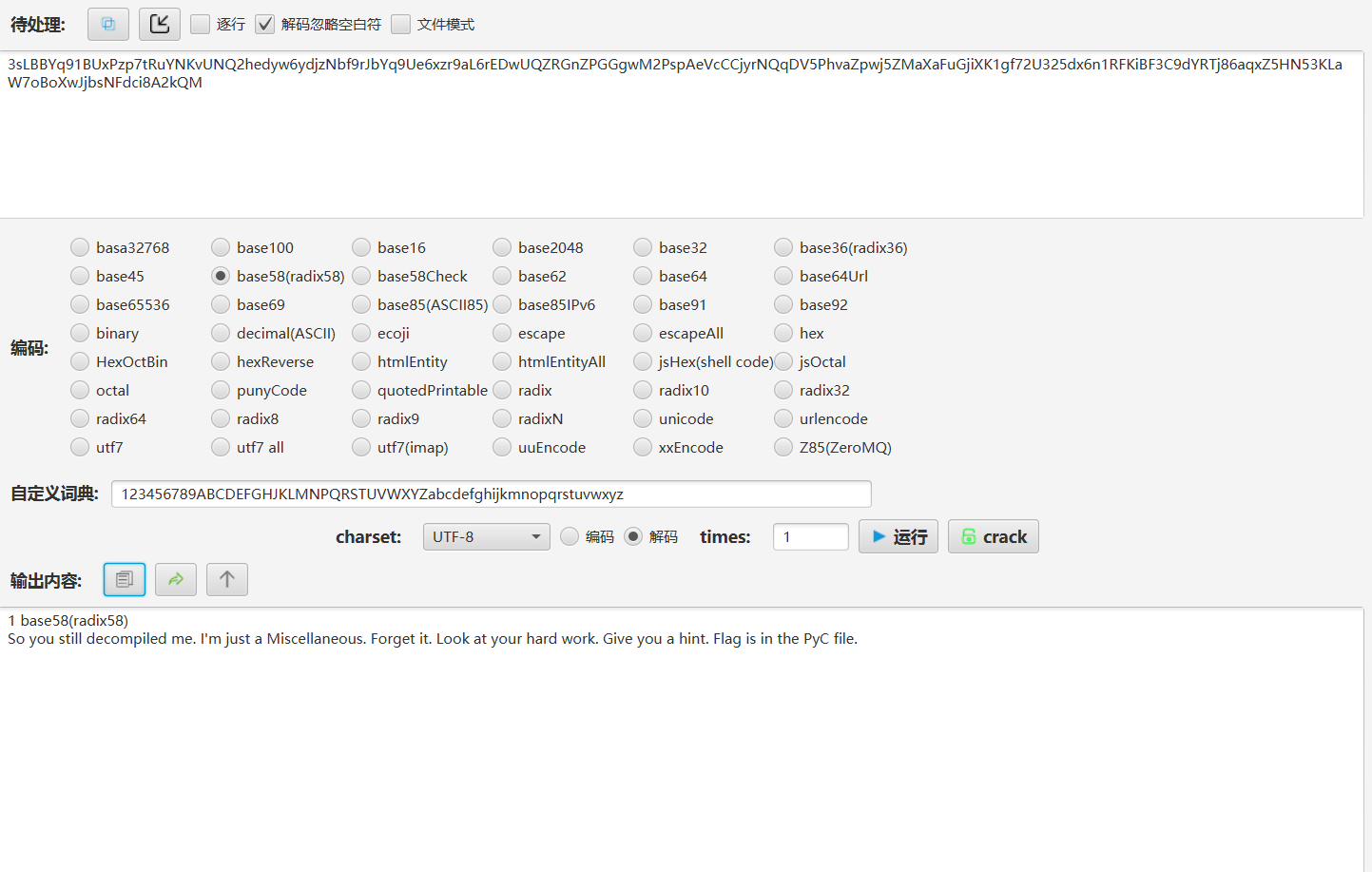
解码最后一句话得到:1 base58(radix58) So you still decompiled me. I’m just a Miscellaneous. Forget it. Look at your hard work. Give you a hint. Flag is in the PyC file. 暗示flag.pyc 本身就是flag,不要解码看python代码,是pyc隐写。
用 stegosaurus 解码隐写文件。
1wget https://mirror.ghproxy.com/https://github.com/AngelKitty/stegosaurus/releases/download/1.0/stegosaurus
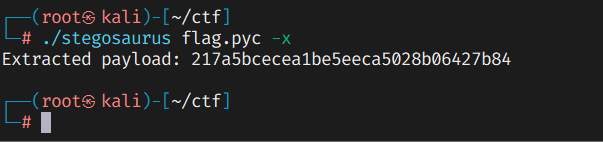
flag{217a5bcecea1be5eeca5028b06427b84}